
About Me
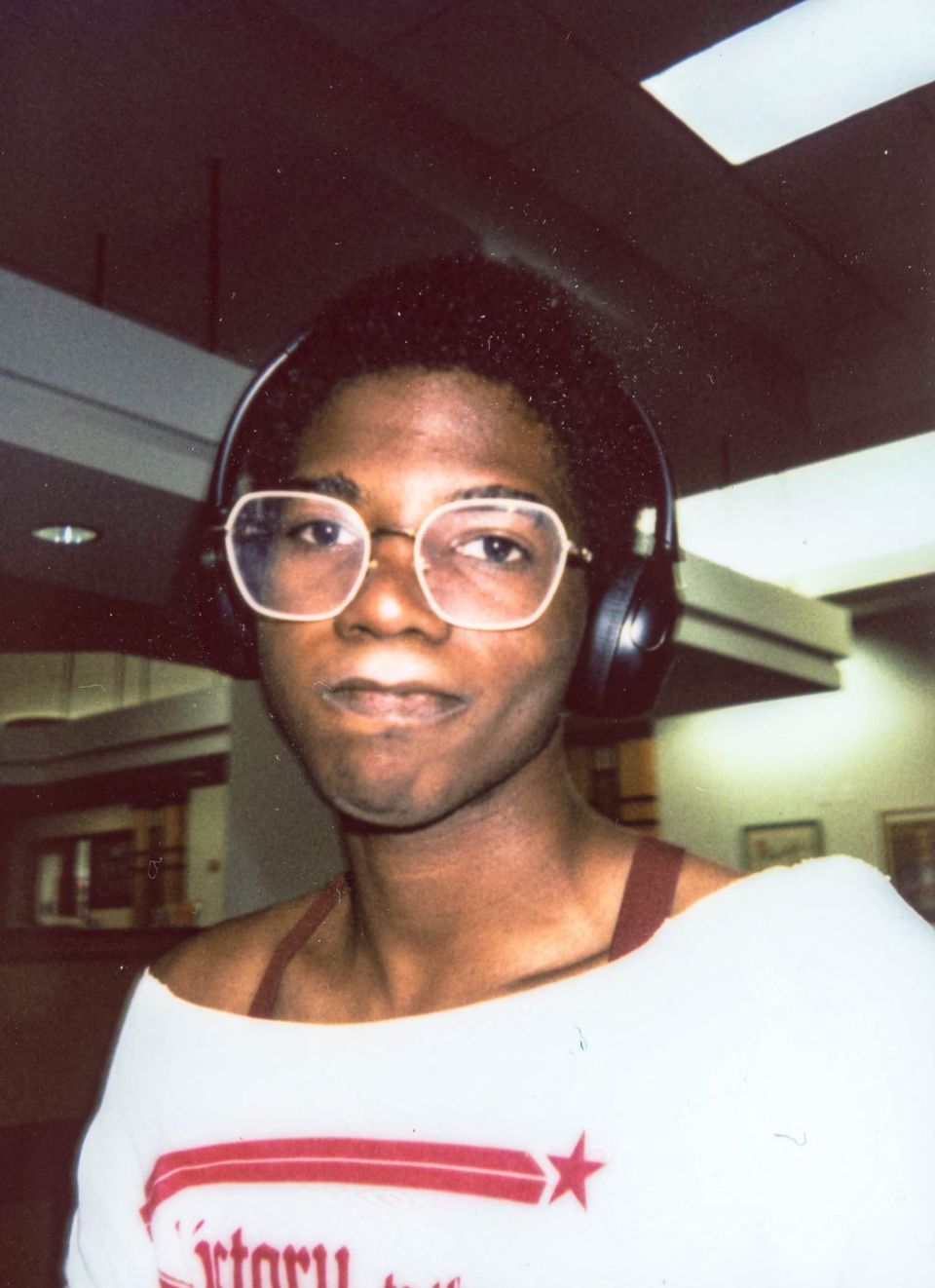
Greetings and salutations! ¡Bonjou é byinvini! My name is Mikaylah-Rosalina Dukes Victorian Framboise ("Rose" for short; "M. R. Framboise" to readers), and I'm a political organizer, photographer, essayist, and journalism student based in New Orleans, Louisiana.
Here on The Framboise Archives you'll find my written work, opinion pieces, longer-form essays (including photo-essays), short journal-style entries, and my various reflections on politics, culture, and the general life of a photographer-organizer/student activist in New Orleans.
The Gear
To get some of the preliminary "what do you shoot on" stuff out of the way: I shoot digital photography on my Nikon D850 DSLR camera with a variety of lenses (my main go-to "work-horse" being a SIGMA EX 24-70mm 𝑓/2.8 lens that I got off of eBay. She's loud with occasionally slow autofocus, but she gets the job done and I really like the results. When a faster lens is necessary (or when I need to be lower profile), I'll shoot for the Nikon AF-S NIKKOR 𝑓/1.8 35mm lens. Ultimately (and I know that this is a photographer cliché), I don't think it's really the gear that makes the picture, but I thought it was worth noting here just in case.
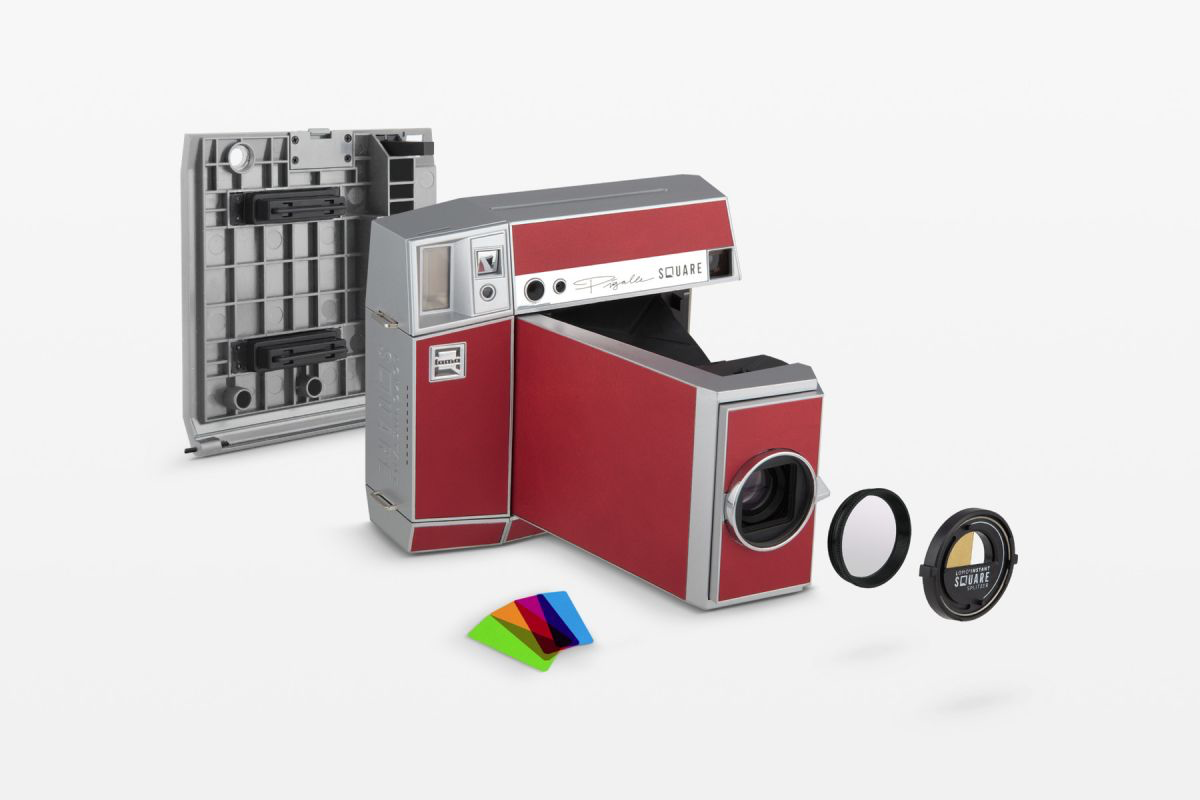
Speaking of how the gear doesn't really make the photographer, I've recently begun shooting on instant film with the Fujifilm Instax Mini 41. And as much as I really hate that they took away my manual controls, instant film is such an amazing medium, and I'm really excited to be able to learn and play with it more. I've actually been so excited that I recently bought Lomography's Lomo'instant Square Glass (pictured below) to shoot on Fujifilm's Instax Square film and I'm also eyeing MiNT Camera's Instantkon RF70 for Instax Wide film.
For me, there is just something about working with instant film that feels more "human" than simple digital photography (not that I dislike digital). To me, instant film feels softer, "warmer" (just a vibe rather than actual color temperature), more concrete; and it forces me to slow down and carefully consider what I'm pointing the camera at, why, and how in order to produce a good picture. At the time of writing this "About Me" I've only been shooting instant film for a few days, but I expect that as I continue this journey, there will be more instant photography both on this website and on my photography instagram page @framboise.photos.
The last little note on gear is that I edit my photos in Adobe Lightroom Classic (thanks to my university for the Creative Cloud subscription) using custom presets, and if you're ever looking for a preset for your photos and would like to try one of mine, you can just e-mail me at [email protected] and I'll happily send you some completely for free.
The Work
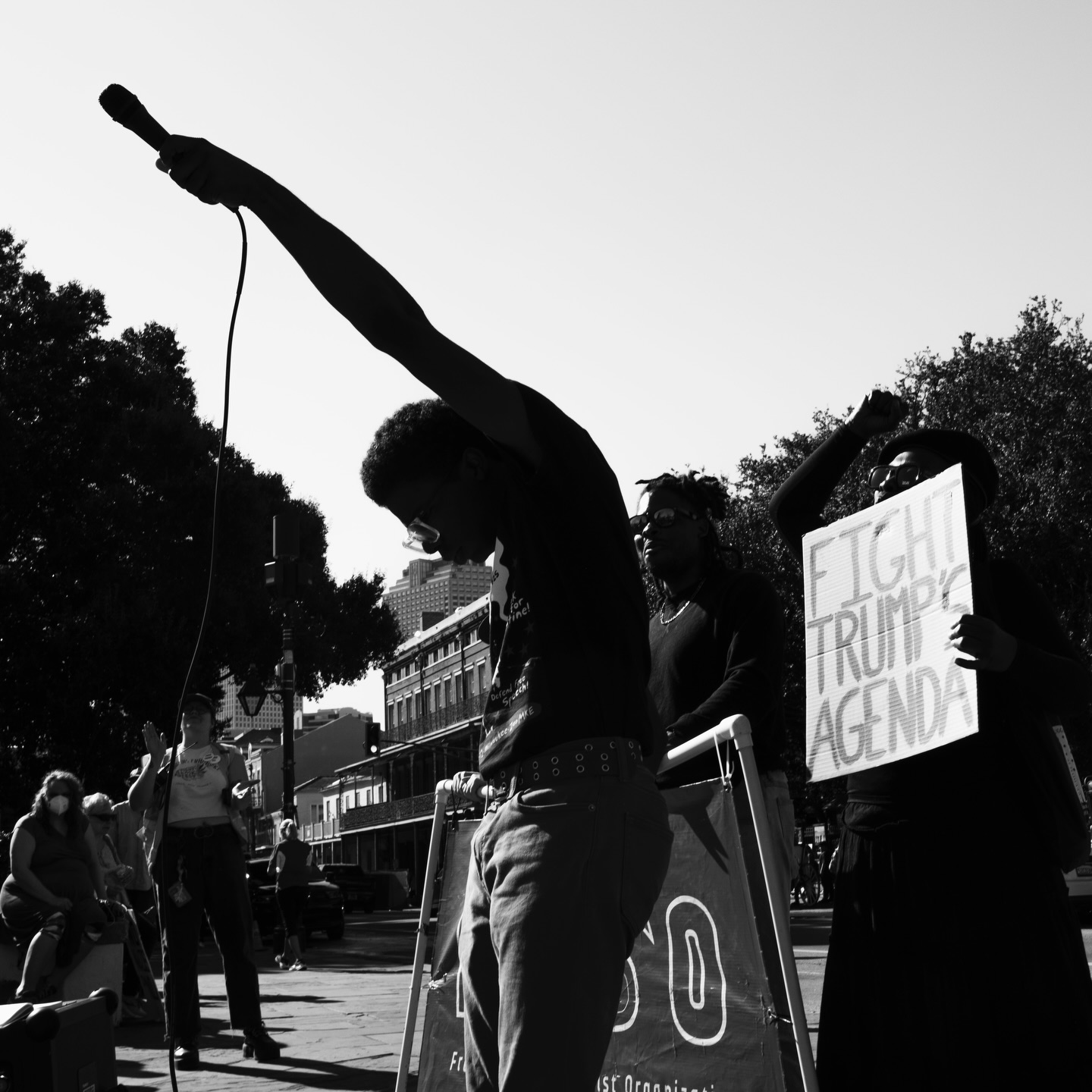
As much as this website focuses on my writing and photography, I am a first and foremost a person who has— as the revolutionary comrade, Dr. Huey P. Newton, put it in his book Revolutionary Suicide— "such a strong desire to live with hope and human dignity that existence without them is impossible." Put more simply, I am a political organizer and, God-willing, a revolutionary. Currently, I organize as a member of Students for a Democratic Society (SDS; Liberate and Unite New Orleans chapter) and a cadre of the Freedom Road Socialist Organization.
And in full honesty, I've found that my work as a photographer and a journalist cannot be divorced from the political practice of Marxist-Leninist organizing. Ultimately, my writing, my photography, and my creative work in general are in pursuit of exalting the great masses of the people most high, and communicating the principle so universal that it's become SDS' "motto" of sorts— that if you dare to struggle, you're daring to win!
Materially, this means that I try to photograph everyday people and the unity of struggle and victory in everyday life— from political practice to a simple walk on the street. In a recent journal entry that I may or may not publish here (we shall see), I wrote the following:
M’oulé prann lê moun ap viv yê vi, é si ina paròl sœlman ki mo sé oulé izé nomé mô z’ouvraj, ça blijé çé « sonder. »
Translated from Louisiana Creole/Kouri-Vini into English, it reads:
I want to take [pictures of] the people[s] living their lives, and if there is only one word that I would like used to name my work, it should be "sonder."
"Sonder" being a word used to describe the feeling that each person one passes by over the course of one's life has themself a life, fears, emotions, struggles, victories, relationships, and desires that are as universal and all-encompassing to them as one's own experiences are to oneself. And if I had to boil the purposes of my photographic, journalistic, and political work down to one prepositional phrase, it would most certainly be
In pursuit of sonder.
In FRSO, we're taught to apply the "mass line" concept from Mao Zedong Thought; it's best summarized through the slogan "from the masses to the masses." In "Some Questions Concerning Methods of Leadership," Mao explains the slogan thusly:
In all the practical work of our Party, all correct leadership is necessarily "from the masses, to the masses". This means: take the ideas of the masses (scattered and unsystematic ideas) and concentrate them (through study turn them into concentrated and systematic ideas), then go to the masses and propagate and explain these ideas until the masses embrace them as their own, hold fast to them and translate them into action, and test the correctness of these ideas in such action. Then once again concentrate ideas from the masses and once again go to the masses so that the ideas are persevered in and carried through. And so on, over and over again in an endless spiral, with the ideas becoming more correct, more vital and richer each time. Such is the Marxist theory of knowledge.
I think that as both a Marxist organizer and a journalist, my job is similar. As a photographer, I must take the ideas, actions, emotions, and imagery of the masses, concentrate them (I suppose literally "develop" them onto a bit of film) and compose the shot such that these abstract ideas, emotions, and image become one definite story, and then ultimately return the images to the masses so that they may use these images— images "turbo-charged" through artistic practice and, in a sense, theory— as their own.
So What will We Find Here?
Now lastly, the question remains: what exactly in the hell is this website for? And I don't really have a single answer to that question. The front page lists The Framboise Archives as a "personal website and home for all things M. R. Framboise," but I don't think that really encapsulates it. Even though it carries my name, this website isn't really about me. It's not even really about the photographs (at least not in isolation). This website is about the beautiful circumstances of life that I've been blessed to be able to inhabit for a time. Here at The Framboise Archives, you'll find essays, photographs, essays with photographs, journal entries, God-willing some projects, and even a few scattered thoughts. But through it all, you'll find an attempt to archive a struggle for the people and an attempt to archive and systematize what I'm learning on my journey as an activist, an organizer, a photographer, and just generally as a human being.
So with that all being said, I hope that you enjoy your stay and remember: ¡Nouzòt t'apé vini de débatman, mé nou z'alé a lê lastær! — We're coming from hardship, but we're going to the stars!